
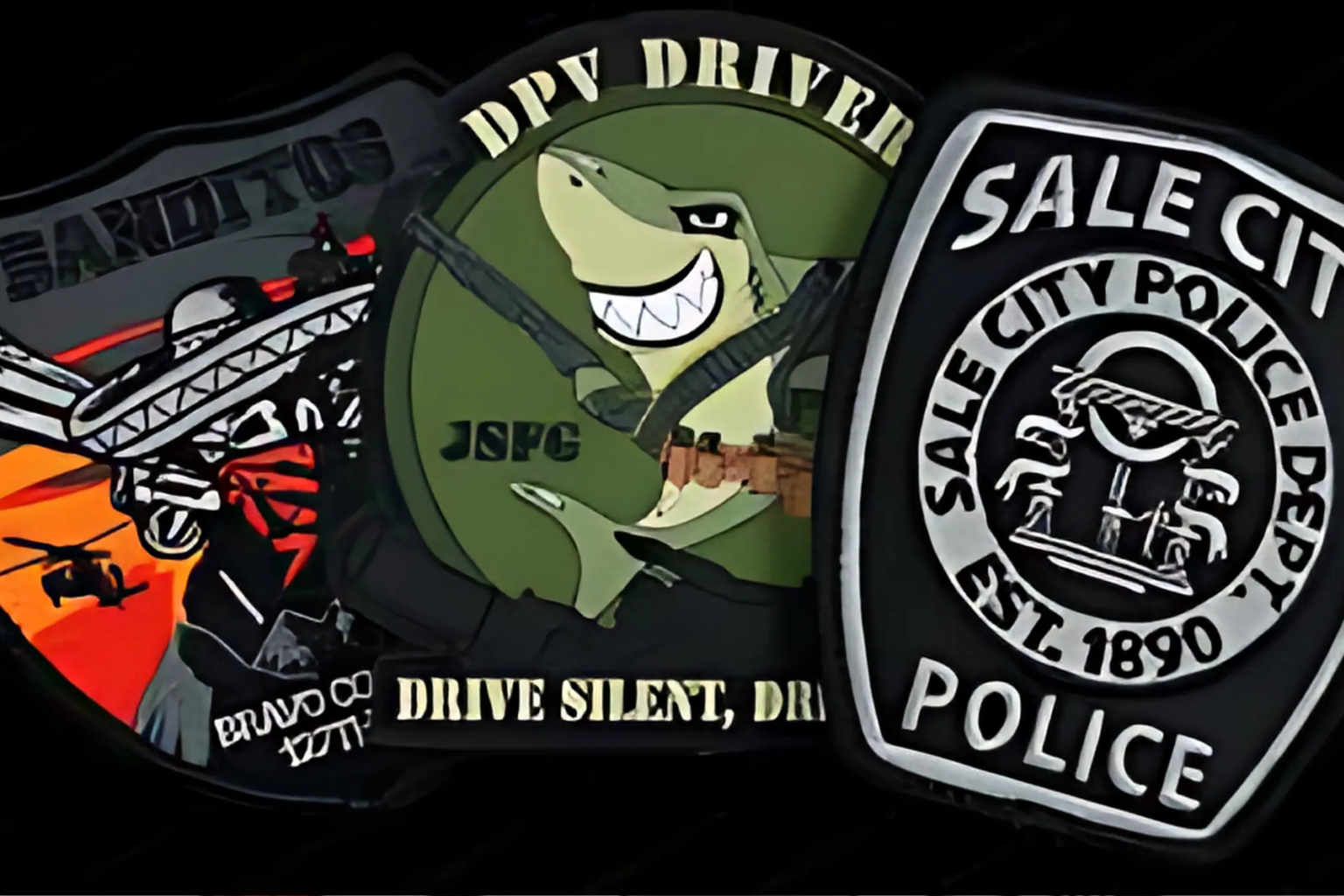
Velcro patches have become a preferred choice for individuals, brands, and organizations that want reusable, durable, and flexible patch solutions. Whether for military uniforms, promotional merchandise, or sportswear, these patches allow for quick attachment and removal without compromising garment integrity. In this guide, we’ll explore the design elements, materials, and digitizing techniques that ensure Velcro patches are both practical and professional.
Why Choose Velcro Patches?
Velcro patches are favored in industries that demand flexibility, quick application, and frequent changes in branding or identification. They are especially useful for military uniforms, sports apparel, tactical gear, and corporate branding because they can be reused without damaging the garment.
The convenience of attaching and detaching patches makes Velcro-backed designs more versatile than traditional sewn or iron-on patches. This reusability reduces costs over time and provides a sustainable alternative for organizations that update branding frequently.
Another reason businesses and individuals choose Velcro patches is the durability of the attachment system. Unlike adhesive patches, Velcro can withstand multiple uses and harsh environments while still maintaining a secure hold.
Velcro patches also allow customization without the need for permanent stitching. Teams or staff can interchange patches for different roles, events, or campaigns, making them ideal for dynamic work environments.
The reusability factor also reduces garment wear and tear. Traditional sewn-on patches can leave holes or damage fabrics, but Velcro patches prevent this issue, maintaining the integrity of uniforms or apparel.
Velcro patches are also highly practical for promotional campaigns. Brands can distribute them at events, and customers can attach them to bags, jackets, or hats with ease, extending the visibility of the brand.
When designed properly, Velcro patches maintain a professional appearance equal to that of sewn patches, making them suitable for both casual and formal branding purposes.
At Mahi Digitizing, we help businesses maximize these benefits by ensuring each Velcro patch is digitized with precision and durability in mind.
Key Design Considerations for Velcro Patches
The foundation of an effective Velcro patch lies in the design structure. Designers must account for thickness, edge finishing, and stitch types to ensure patches remain functional while retaining a polished look.
A strong border is essential to prevent fraying. Most Velcro patches use either a merrowed border for rounded edges or a satin stitch border for clean, sharp lines. Choosing the right border depends on the patch shape and usage environment.
Color selection is another key design factor. Patches that contrast well against their garment background tend to stand out more and maintain visibility in both casual and professional contexts.
Text clarity should always be considered. Small text can be difficult to embroider cleanly, so fonts should be bold and block-style when possible. This ensures legibility even at smaller patch sizes.
Thickness balance is also critical. If the patch is too thick, it may not adhere well to the Velcro backing. If it is too thin, durability is compromised. An optimal thickness ensures long-lasting performance.
Designers should also think about the intended application. A tactical gear patch may require muted tones and camouflage elements, while a promotional patch may call for bold, colorful designs.
Velcro placement also affects usability. Patches should be designed with appropriate backing sizes to ensure easy alignment and attachment on garments or gear.
For inspiration, check out our blog on designing the perfect embroidered patch, which shares insights on balancing aesthetics with practical function.
Best Materials for Velcro Patches
Choosing the right material ensures durability and comfort for the wearer. Twill is one of the most popular fabrics used in patch production because it is durable yet flexible, making it suitable for embroidery.
Canvas is another excellent choice, particularly for heavy-duty patches used in outdoor or tactical settings. Its rugged texture provides a solid base for embroidery without losing shape over time.
Polyester blends are widely used for commercial and promotional patches because they are affordable, lightweight, and provide good stitch quality.
Backing material is equally important. The Velcro hook side must be stitched securely to prevent separation, while the loop side is generally attached to the garment.
For long-lasting durability, industrial-grade Velcro is preferred. It withstands more attachment and removal cycles compared to standard Velcro, making it ideal for military or professional use.
Designers should also consider the weight of the patch. Heavy materials may pull at the garment or create discomfort for the wearer, so choosing a balanced fabric is essential.
Proper reinforcement around the edges ensures that the patch remains intact even under rough handling. This is particularly important for tactical patches that experience frequent use.
When paired with expert digitizing from embroidery digitizing services, the right material choices ensure professional results and long-lasting wear.
Embroidery Digitizing for Velcro Patches
Digitizing plays a crucial role in the success of Velcro patches. Without accurate digitizing, even the best materials may fail to deliver professional results.
The digitizer determines stitch types, densities, and underlays, which affect how well the patch holds up during repeated use. Incorrect settings can cause puckering or loose stitches.
Underlay stitches are especially important for Velcro patches because they stabilize the fabric and ensure the top stitches remain neat and aligned.
Density control is another vital element. If stitches are too dense, the patch may become stiff and difficult to attach to Velcro. If too loose, details may be lost.
Digitizing must also account for patch borders. A clean, reinforced border ensures that the patch edge does not unravel even after multiple uses.
Testing the digitized file before mass production is essential. Sample runs allow adjustments to be made to stitch angles, densities, or colors.
High-quality digitizing can also reduce production time by optimizing stitch paths, lowering machine wear and minimizing thread breaks.
For more guidance, see our post on best practices for embroidery stitch files, which provides advanced tips for professional results.
Applications of Velcro Patches
Velcro patches have countless applications, making them a preferred choice in industries that require flexible branding and identification solutions.
Military and tactical organizations rely heavily on Velcro patches for rank insignia, unit branding, and mission-specific identifiers. Their easy removal makes them ideal for quick updates.
Sports teams use Velcro patches to customize uniforms for different events, tournaments, or player roles, saving time and cost compared to creating new uniforms for each occasion.
Corporate companies use Velcro patches on employee uniforms for branding or promotional campaigns. Staff can easily swap patches depending on the event or campaign.
Promotional events often feature Velcro patches as giveaways. Customers attach them to jackets, hats, or bags, turning them into walking advertisements for the brand.
Hobbyists and collectors also appreciate Velcro patches because they can be swapped out and displayed on patch boards without sewing or gluing.
Emergency response teams use Velcro patches to display roles, names, or units clearly, allowing for fast identification during critical situations.
For more on patch styles, explore our blog on embroidered vs woven patches, which explains the differences and best uses.
Why Work with a Professional Digitizing Team?
Working with professionals ensures that Velcro patches are digitized and produced to the highest standard. Experienced digitizers understand how to balance density, borders, and underlays for durability.
Professionals also account for fabric type, ensuring that patches remain flat and do not distort during stitching or repeated use.
Expert digitizing reduces errors and machine downtime, leading to faster production and cost savings for businesses.
A professional team also provides design consultation, ensuring that small details are adjusted for embroidery compatibility without losing the design essence.
Consistency is another advantage. When working with a skilled digitizing team, you can expect uniform quality across every batch of patches.
Professional services also guarantee compatibility with different embroidery machine formats, preventing production delays.
At Mahi Digitizing, we provide detailed artwork preparation, optimized stitch planning, and rigorous quality checks for every Velcro patch project.
By partnering with experts, you ensure that your Velcro patches are not only functional but also polished and professional, leaving a lasting impression.
Final Thoughts
Velcro patches are an excellent choice for anyone seeking versatility, durability, and convenience in custom patch design. They provide an adaptable solution for industries ranging from military to fashion.
Proper design considerations, such as strong borders and correct thickness, ensure patches that attach and remove seamlessly while maintaining visual appeal.
Choosing the right materials like twill, canvas, or polyester blends adds to the longevity of patches and ensures comfort for the wearer.
High-quality digitizing transforms artwork into precise stitch files that guarantee professional, durable results.
Applications of Velcro patches continue to expand, from uniforms to promotional items, demonstrating their value in multiple industries.
Working with a professional digitizing team ensures that patches are optimized for usability, aesthetics, and long-lasting performance.
With the right approach, Velcro patches become more than just accessories—they are powerful tools for branding and identity.
If you are ready to elevate your patch designs, request a quote today and let our team help you create high-quality Velcro patches that combine durability with style.